Ray Boston Locksmiths Service Team
Local locksmith team
Jun 18, 2026 10 min read
A broken doorknob is one of those problems that shows up at the worst possible time — you're running late, the weather is doing something miserable, and suddenly your front door just won't cooperate. Before you panic about what to do if locked out of your house, it's worth knowing that some doorknob and mortise lock issues have simple fixes you can try on your own in under ten minutes. This guide walks you through those checks step by step, explains what the symptoms mean, and helps you figure out when a trained locksmith needs to step in.
Ray Boston Locksmiths runs a 24/7 mobile service across the Greater Boston area — from Beacon Hill to Brighton, Dorchester to the South End — so if your own troubleshooting hits a wall, a qualified technician can be on the way quickly. But let's start with what you can safely try first.
## First, Rule Out the Simple Stuff: Checks Anyone Can Do Safely
Before assuming the worst, run through these quick checks. Start with the obvious: is the door itself aligned in the frame? Boston's older triple-deckers and Victorian brownstones are notorious for seasonal wood swelling — especially after a wet spring or a harsh winter. A door that has swollen or dropped slightly in its frame puts side-pressure on the latch bolt, which can make a perfectly good door knob lock feel seized even when the mechanism itself is fine. Push or lift the door gently while turning the knob, and see if that releases the resistance.
Next, look at the latch bolt — the spring-loaded tongue that pokes out from the edge of the door. If it's fully extended and stuck, try pressing it in by hand with your thumb while the door is open. If it springs back freely, the mechanism is probably okay and the problem is door alignment or strike plate positioning. If the bolt is sluggish, sticky, or barely moves, that points to internal wear or a lubrication issue, which we cover in the next section.
## How to Lubricate a Seized Door Knob Lock (and When It Won't Help)
A dry or corroded lock cylinder is one of the most common causes of a stiff or unresponsive door knob lock, and it's an easy fix if you catch it early. Do not use WD-40 inside the cylinder — it's a water displacer, not a true lubricant, and it attracts dust that will make the problem worse over time. Instead, use a dry graphite lubricant spray or a purpose-made lock lubricant. Insert the nozzle into the keyway, give it a short burst, then insert your key and work it in and out several times to distribute the lubricant through the pins. Do the same with the knob mechanism itself if there's an access point on the collar.
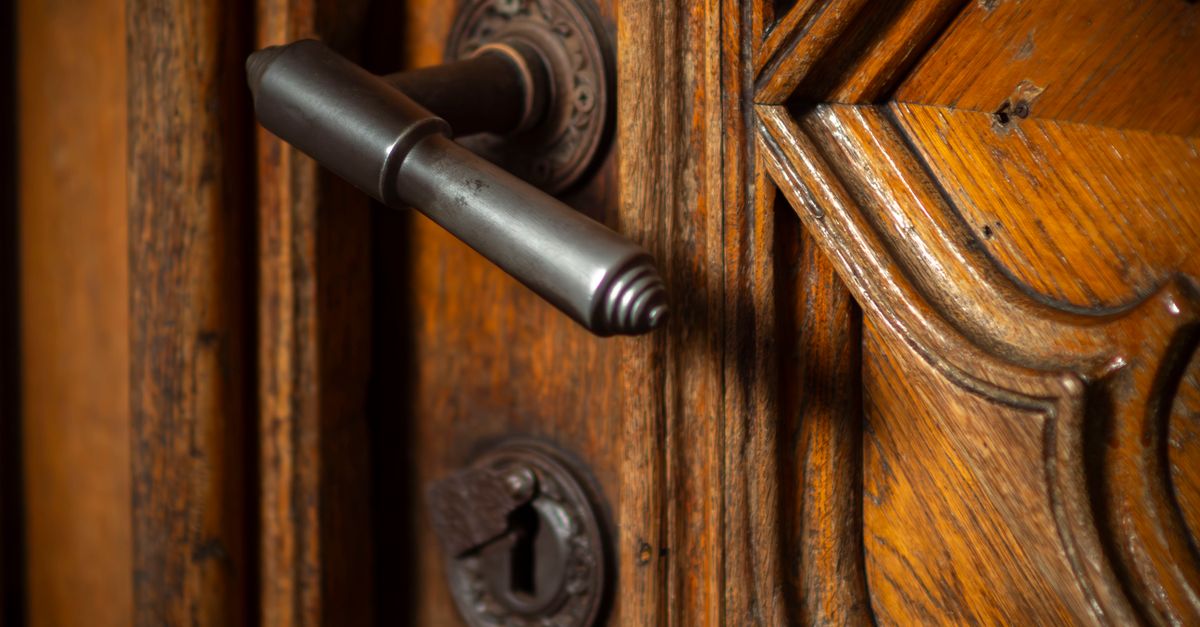
If lubrication doesn't restore smooth operation within a couple of attempts, you're likely dealing with worn or broken internal components — a sheared cam, a collapsed spring, or in older Boston homes, a failing mortise lock cartridge. Mortise locks are common in pre-war buildings across neighborhoods like the South End and Back Bay, and while they're robust when maintained, they have more moving parts than a standard cylindrical knob and require hands-on assessment by an experienced locksmith when they start to fail. At that point, stop forcing the mechanism — continued force can break the cylinder completely, turning a repair job into a full lock replacement.
## What to Do If Locked Out of Your House While Troubleshooting
If you've stepped outside mid-check and the door closes behind you, or if the knob mechanism gives out entirely while you're trying to diagnose it, here's what to do when locked out of your house: first, check every other point of entry you legitimately have access to — a back door, a side gate, a window you know was left unlocked. Check with a neighbor or family member who may hold a spare key. These are the safe, legitimate steps to try before anything else.
What you should not do is attempt to manipulate the lock yourself using improvised tools or techniques you've seen online. Beyond the obvious risk of damaging the lock further, attempting forced entry on your own property can draw attention from neighbors or even law enforcement, especially in close-knit Boston neighborhoods where people look out for each other. If you're genuinely stuck outside, call a professional. Our team at Ray Boston Locksmiths answers around the clock — dial (617) 203-5640 and a trained technician will come to you, verify your identity and right of access, and get you back inside without unnecessary damage to your door or lock hardware.
## Mortise Lock vs. Standard Knob: Why the Type of Lock Changes Everything
Not all door locks are created equal, and understanding what type of lock you have directly affects both your troubleshooting approach and the repair options available. A standard cylindrical doorknob lock — the kind found on most modern interior and exterior doors — has a relatively simple internal mechanism and is often repairable or replaceable with off-the-shelf hardware from any home improvement store. Brands like Schlage and Kwikset make solid residential-grade options that a skilled locksmith can fit and key to your existing setup.
A mortise lock, by contrast, is a complete lock body that sits inside a pocket (the mortise) cut into the door's edge. It typically includes a deadbolt, a latch, and sometimes a privacy function — all in one integrated unit. Mortise locks are the standard in Boston's older rental buildings, brownstones, and commercial properties, and they offer genuinely superior security when maintained correctly. However, when a mortise lock fails — whether from a broken cam, a worn spindle, or a degraded case — it's not a job for a trip to the hardware store. Replacement mortise lock bodies must be sized and aligned precisely to the existing door preparation, and getting that wrong means a non-functioning lock or a compromised door. This is where an experienced locksmith who works with mortise lock hardware regularly makes all the difference between a clean fix and a costly mistake.
## When to Stop DIY and Call an Emergency Locksmith
There's a clear line between troubleshooting and making things worse, and it usually shows up in one of these ways: the knob spins freely but the latch doesn't move (broken internal mechanism), the key turns but nothing happens (broken cam or tailpiece), the door feels solid but simply will not open despite the latch retracting (possible deadbolt engaged that you've forgotten about, or a warped door pressing the latch against the strike plate under tension), or you can see physical damage to the lock body itself — cracks, bent components, or signs of attempted tampering.
Any of these scenarios calls for a professional assessment. As an emergency locksmith operating 24/7 across the Boston area, Ray Boston Locksmiths handles everything from a simple lock rekey after a break-in scare to a full mortise lock replacement on a historic South End rowhouse. We also cover home lockout help whether it's 2 in the afternoon or 2 in the morning, residential door lock upgrades when you want to step up your security with better hardware, and lock changes when you've moved into a new place and want to be certain no old keys are floating around. The cost of a service call depends on several factors — the type and brand of lock involved, the time of day, our travel distance to your location, and whether parts are needed on the spot. We always confirm an exact price upfront before any work begins, so there are no surprises. To get that quote or to have someone on the way now, call (617) 203-5640 — we answer 24/7.
## Preventing the Next Doorknob Breakdown: Upgrades Worth Considering
Once your immediate problem is solved, it's worth thinking about what comes next — especially if your current lock is more than ten years old, shows visible wear, or came with the property when you moved in. A lock change is one of the highest-value security steps any homeowner can take. If you're not sure who has copies of your current keys — previous tenants, contractors, an ex-roommate — rekeying or replacing the lock removes that uncertainty entirely.
For homeowners looking to step up security with residential door lock upgrades, a qualified locksmith can assess your door and frame, recommend hardware that fits your existing prep work or advise on what modifications are needed, and install it correctly so the lock actually performs as designed. Mortise lock systems remain one of the most secure options for exterior doors on older Boston homes — when properly specified and installed, they're significantly harder to defeat than a standard knob-and-deadbolt combination. Ask about high-security cylinder options as well, which resist drilling and picking at a level that standard hardware simply doesn't. A quick conversation with our team can tell you exactly what makes sense for your door, your neighborhood, and your budget.
Frequently asked questions
What to do if you're locked out of your house in the middle of the night in Boston?+
Start by checking every legitimate entry point you have access to — back door, garage entry, or a neighbor holding a spare key. If none of those options work, call a 24/7 mobile locksmith. Ray Boston Locksmiths operates around the clock across the Boston area. Dial (617) 203-5640 and a trained technician will come to your location, confirm your right of access, and get you back inside safely. Do not attempt to force a window or manipulate the lock yourself — you risk injury, property damage, and unwanted attention from neighbors or law enforcement.
How much does a locksmith cost in the Boston area, and what affects the final price?+
There's no single flat rate because several factors shape the final quote: the type of lock involved (a standard cylindrical knob is simpler than a mortise lock with multiple components), the time of day (overnight and weekend calls involve different logistics), travel distance to your location, and whether replacement parts are needed on the spot. What we can tell you is that Ray Boston Locksmiths always confirms an exact upfront price before any work begins — no hidden fees added after the job. Call (617) 203-5640 for a straight answer on what your specific situation will cost.
What does a locksmith actually do when they respond to a broken doorknob call?+
A skilled locksmith starts with a proper diagnosis — checking door alignment, lock mechanism function, and the condition of the latch and strike plate before recommending any repair. From there, the job might involve lubricating and adjusting the existing hardware, replacing a worn cylinder or internal component, swapping in a new lock body (including mortise lock replacement on older doors), or rekeying so that only your new keys work. A good technician explains what they found and what they're doing before they start, and leaves the door fully functional and more secure than they found it.
What is a locksmith call-out fee and will I be charged even if the job is simple?+
A call-out fee covers the cost of a trained technician traveling to your location and arriving ready to work — it reflects real costs like fuel, time, and availability, especially for 24/7 emergency response. Some locksmiths roll this into a total job price; others list it separately. At Ray Boston Locksmiths, we give you a complete upfront quote that covers the full scope of the work before anything begins, so you know exactly what you're paying regardless of how straightforward or complex the job turns out to be. Call (617) 203-5640 to get that number before you commit to anything.